Heritage
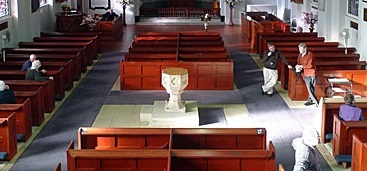
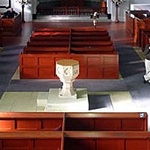
 Initially there was no music at church services as Governor Macquarie felt parishioners were there to hear the word of the Lord, but later local militia sat in the back three rows of the centre block and provided the music. In 1916 Rev. James Steele wrote that "a portion of the old music stands in the back three rows can still be seen". But in 1963 the cedar pews were sanded back and consequently there is no longer any indication of the old music stands.
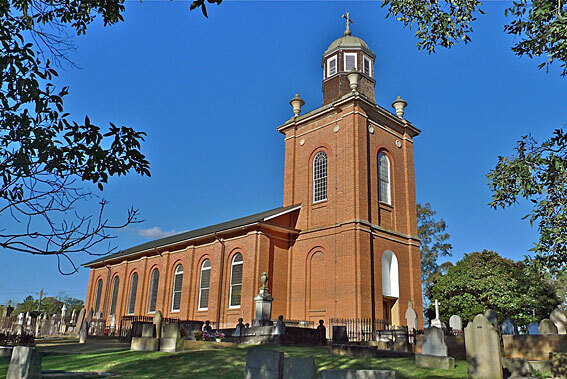
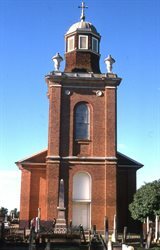
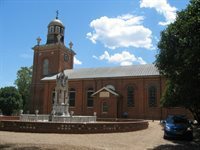
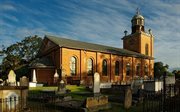
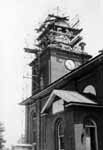
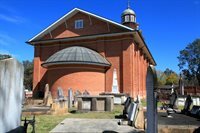
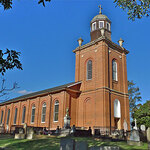
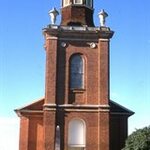
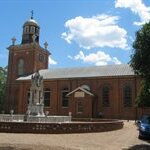
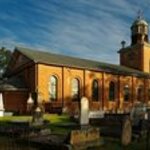
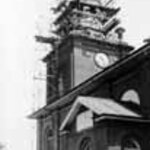
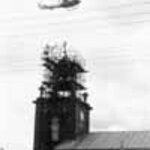
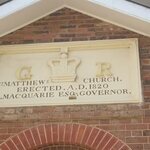
The top of the cross on the tower is 94'6" above the ground allowing nothing to compete with the church in height . The bell tower is a sister to the one at St. James' Church, Sydney. The belfries were cast in the same foundry in London and came to the colony on the same ship . The sound-carrying qualities of the ringing bells were an ideal way of summoning the parishioners to church from the village over a kilometre away. The clock in the tower was a gift from King George IV as was the Bible still held in the church and used until 1937 when it became too fragile for constant use . The clock, was wound every week, heralded the time in the days before wristwatches, alarm clocks, telephones and radios. The clock has old-fashioned weights and required considerable strength to wind it up. It now has an electric motor.
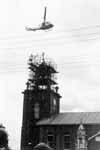
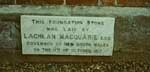
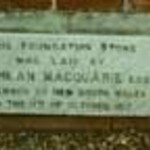
A foundation stone was placed at the base of the tower about 60 years ago though the correct placing of the original coins and foundation stone is not known.
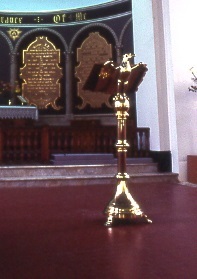
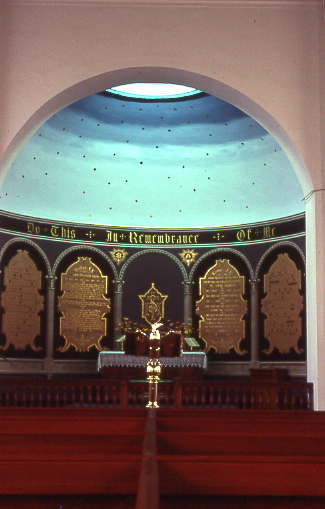
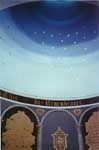
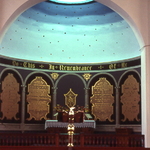
Inside the building the most magnificent feature is the beautiful reredos. For many years this was covered by curtains as there was difficulty in finding the fine craftsmen to restore the painting.
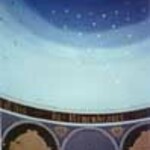
The reredos, on the eastern side of the church, is semi-circular. It has five arches in which are painted four scrolls and contain the Lord's Prayer, Exodus XX, the Ten Commandments and the Apostles Creed. The ceiling of the apse is painted in graduating colours of blue with gold stars representing the night sky. John Tebbutt, the local Windsor astronomer who is commemorated on the $100 note, lay on the floor and drew the stars on the ceiling where they would appear that particular night. Naturally the stars in the sky have moved a few degrees since that time. The apse was able to be restored when some fine craftsmen came out from Europe to restore the Queen Victoria Building and furthered their talents at Windsor.
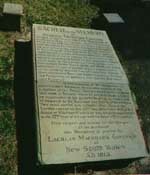
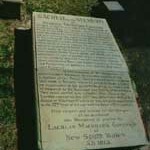
The Tomb of Andrew Thompson
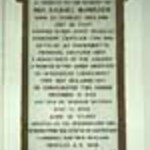
Andrew Thompson was a Scottish-born settler who was able to go from convict to become the wealthiest settler in early colonial Australia and a foundational figure of the Hawkesbury District. After he earned an absolute pardon, he served as Chief Constable of the Hawkesbury and later became the first ex-convict to be appointed as a Justice of the Peace and Magistrate by Governor Lachlan Macquarie. He was also credited with saving over 100 people during the devastating floods of 1806 & 1809 and is a true hero of the Hawkesbury District.
Other Noteable Graves
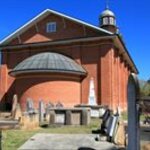
Other famous people are interred in the graveyard, such as First Fleet surgeon, Thomas Arndell, the builder of the road over the Blue Mountains, William Cox, and possibly the most interesting is that of John Tebbutt, the astronomer. He had his family tomb built in 1910, six years before his death and in line with his hobby it is surmounted on four corners by celestial spheres, made of marble, depicting the celestial co-ordinates.
Images Mentioned Above